

Local Technicians Certified in Climate-Friendly Refrigeration
Basseterre, St. Kitts 2 June 2026 – The Department of Environment Ozone Unit recently hosted a six-day Certification Training in Good Refrigeration Practices for refrigeration and air-conditioning (RAC) technicians. This event was organized under the country’s HCFC Phase-out Management Plan and coordinated in cooperation with the United Nations Environment Programme. The workshop, which took place from May 26th to 30th, successfully trained over 12 local RAC technicians.
The training focused on practical, results-oriented instruction aimed at reducing the use and emissions of hydrochlorofluorocarbons (HCFCs) in the servicing sector, a key area of concern as it remains the largest user of ozone-depleting substances in many developing countries. In alignment with the Montreal Protocol’s phase-out obligations, the program aimed to equip technicians with both knowledge and hands-on skills to limit refrigerant losses, adopt good servicing practices, and transition smoothly to alternatives that are less harmful to the environment. This initiative highlights the government’s commitment to environmental protection and seeks to encourage ongoing support from stakeholders and the public.

The workshop combined five days of classroom and practical workshops with a final day of assessment. Daily topics ranged from the science of ozone depletion and updates to licensing systems to basic refrigeration principles, safe handling, tool use, pressure and leak testing, and the operation of recovery machines. Sessions were led by seasoned RAC professionals, including RAC Association President Mr Terry Handley, Mr Bevis Brooks, and Mr Gregory Francis, and were designed for on-the-job technicians with two to three years of experience.
Participants engaged in recovery and recycling procedures and were trained in preventive maintenance, record-keeping, and techniques to prevent leaks that significantly reduce HCFC emissions during the installation, servicing, and decommissioning of systems. Emphasis was placed on the proper use of recovery machines and refrigeration tools. Mr. Handley explained, “Having the correct tool for the job isn’t enough. To be efficient, safe, and sustainable, we must also practice using the tool correctly.” The final day included a comprehensive theory and practical examination, and successful candidates received a certificate in good refrigeration practices along with registration with the RAC association.
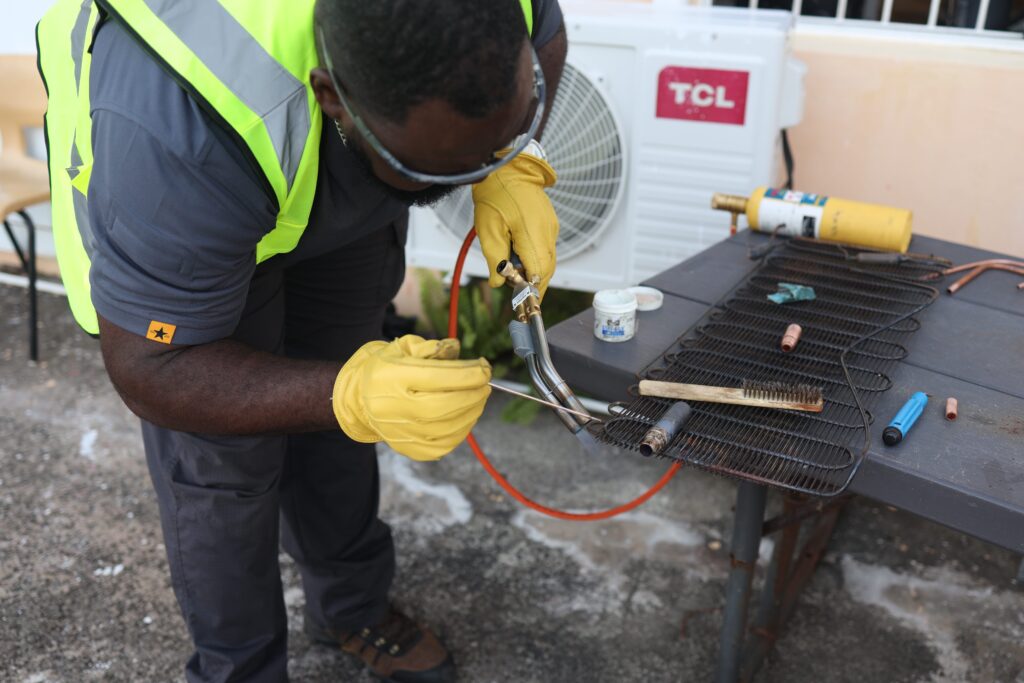
This training is a significant achievement for the Federation of St. Kitts and Nevis as it helps to foster a skilled local workforce capable of confidently implementing the HCFC phase-out and supporting national environmental commitments. The training not only showcases the country’s dedication to environmental leaderships but also its capacity building in the RAC sector.
In addition to technical benefits, the program strengthens the institutional implementation of the HPMP through collaboration with customs officers and environmental inspectors, promoting a unified approach to controlling ODS imports and exports. This partnership reflects a collective commitment to environmental protection and sustainable progress.
Overall, this certification training marks a meaningful step toward long-term environmental stewardship. By integrating theory, practical training, and evaluation, it prepares technicians to support regulatory compliance and advance St. Kitts and Nevis’s goals for ozone protection and climate resilience for future generations.
The post Local Technicians Certified in Climate-Friendly Refrigeration appeared first on SKNIS.

