

St. Kitts and Nevis Brings Small Island Developning State Perspective to First Global Chemicals Conference in Geneva
FOR IMMEDIATE RELEASE
GENEVA, Switzerland, November 19, 2026 – Saint Kitts and Nevis brought a strong small island developing state (SIDS) voice to global chemicals talks this week, as Dr Marcus L. Natta, Cabinet Secretary, represented the Federation at the High-Level Dialogue of the first International Conference of the Global Framework on Chemicals (IC1), which concludes today in Geneva.
IC1, held from 16 to 20 November 2026 at the Geneva International Conference Centre, is the first global conference under the Global Framework on Chemicals since its adoption in 2023. The Conference is organised around three themes: tracking progress, accelerating action, and investing for impact.
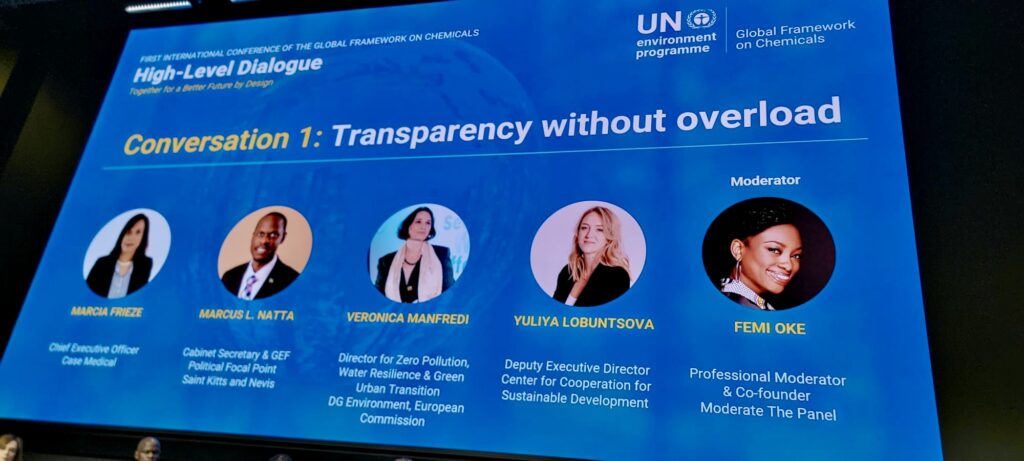
Dr Natta was specially invited to join the panel “Transparency without overload” during the High-Level Dialogue on 18–19 November. The panel examined what product and chemicals information is needed to track progress credibly and how it can flow across value chains without overwhelming governments, businesses and communities.
The issue is pressing. Governments, businesses, investors and consumers increasingly need reliable information on chemicals in products, yet reporting systems remain fragmented, costly and hard to compare. Getting this right can strengthen accountability, improve risk management and build public trust, provided information sharing stays practical, proportionate and interoperable.
Drawing on his experience as former Vice-President of the Stockholm Convention on Persistent Organic Pollutants, Minamata Convention on Mercury focal point, and GEF Political Focal Point for St. Kitts and Nevis, Dr Natta set out the realities facing small island states. SIDS produce almost no chemicals but import nearly all of them, mostly embedded in everyday products such as electronics, building materials, vehicles, plastics, cosmetics and pesticides. Islands then carry the end-of-life burden, with limited landfill space and fragile coastal and marine ecosystems.
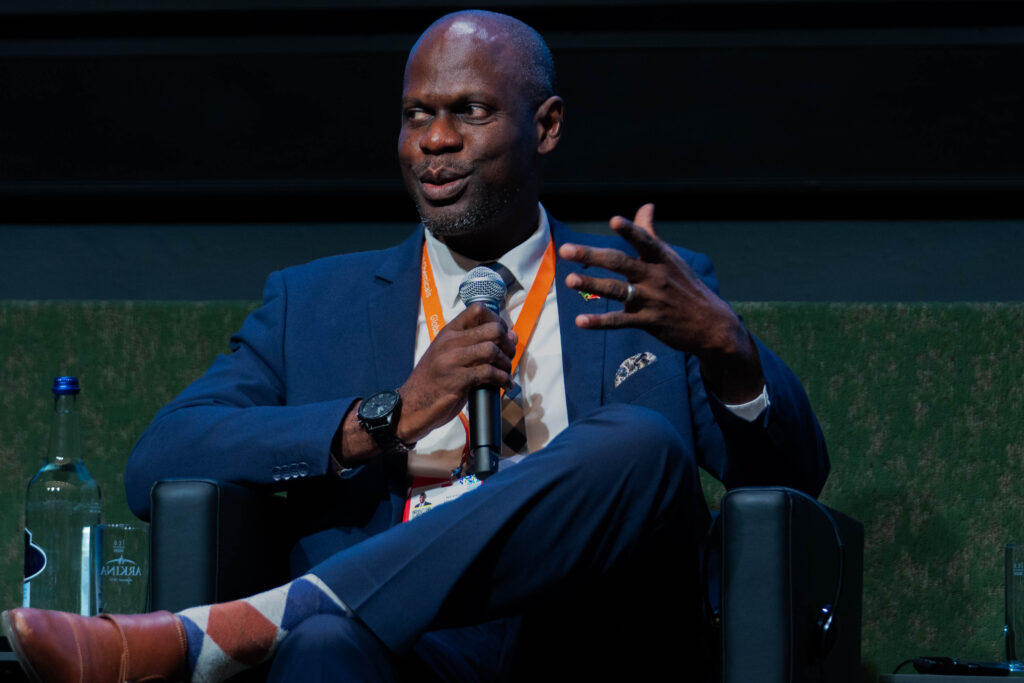
“Transparency systems designed in producer economies too often stop with the brand owner or the first buyer,” Dr Natta said. “For small islands, information must travel the full length of the value chain: to the importer, the customs officer, the retailer and, critically, the waste manager.”
He called on producer countries and industry to design chemical information systems with the smallest user in mind. “If the system works for St. Kitts and Nevis, it will work for everyone,” he said.
Dr Natta also stressed that for a large ocean state, chemicals do not stay on land. Agrochemical runoff, legacy contamination and plastics and their additives end up on reefs and in fisheries that underpin tourism and food security. Information on chemicals in products is therefore also ocean governance, and closely tied to climate resilience, as hurricanes and other disasters can release chemical hazards.
He placed these priorities within the Government’s Sustainable Island State Agenda, noting that sound management of chemicals and waste is integral to the Federation’s transformation into a sustainable island state.
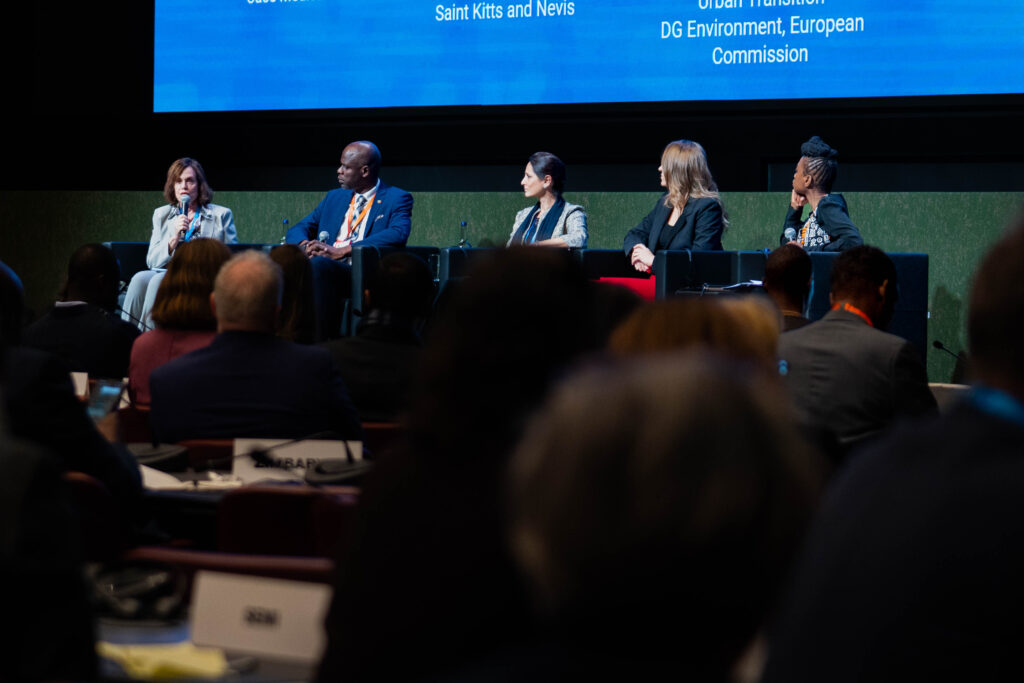
Dr Natta also took part in a closed session for high-level representatives, who shared national and organisational priorities and experiences under the Framework. Discussions drew on a preliminary review of progress towards the Framework’s strategic objectives and targets, which identifies three areas for accelerated action:
- Strengthening legal frameworks and institutional mechanisms
- Increasing transparency and advancing safer alternatives
- Mobilising finance and scaling up investment
The participation of St. Kitts and Nevis reaffirms the Federation’s commitment to the Global Framework on Chemicals, and to ensuring that the priorities of small island developing states are reflected in global efforts towards a planet free of harm from chemicals and waste.
About the Global Framework on Chemicals
The Global Framework on Chemicals – For a Planet Free of Harm from Chemicals and Waste was adopted in September 2023 at the fifth International Conference on Chemicals Management (ICCM5). Supported by a secretariat hosted by the United Nations Environment Programme (UNEP), it is a voluntary, multi-stakeholder framework with five strategic objectives and 28 targets covering the full life cycle of chemicals, aligned with national priorities.
– END –
The post St. Kitts and Nevis Brings Small Island Developning State Perspective to First Global Chemicals Conference in Geneva appeared first on SKNIS.